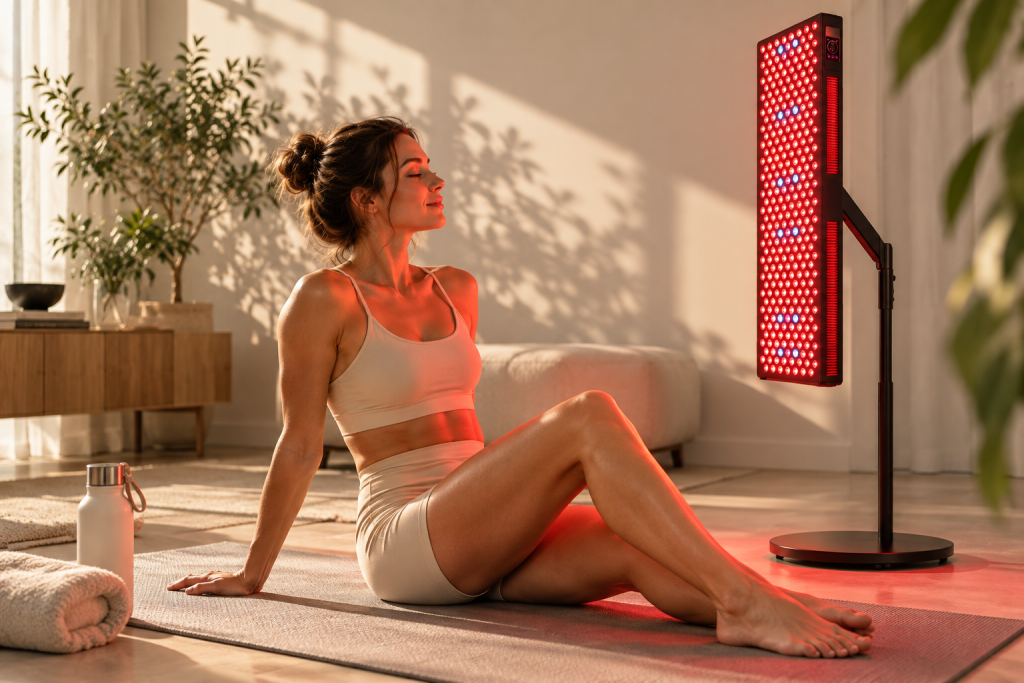
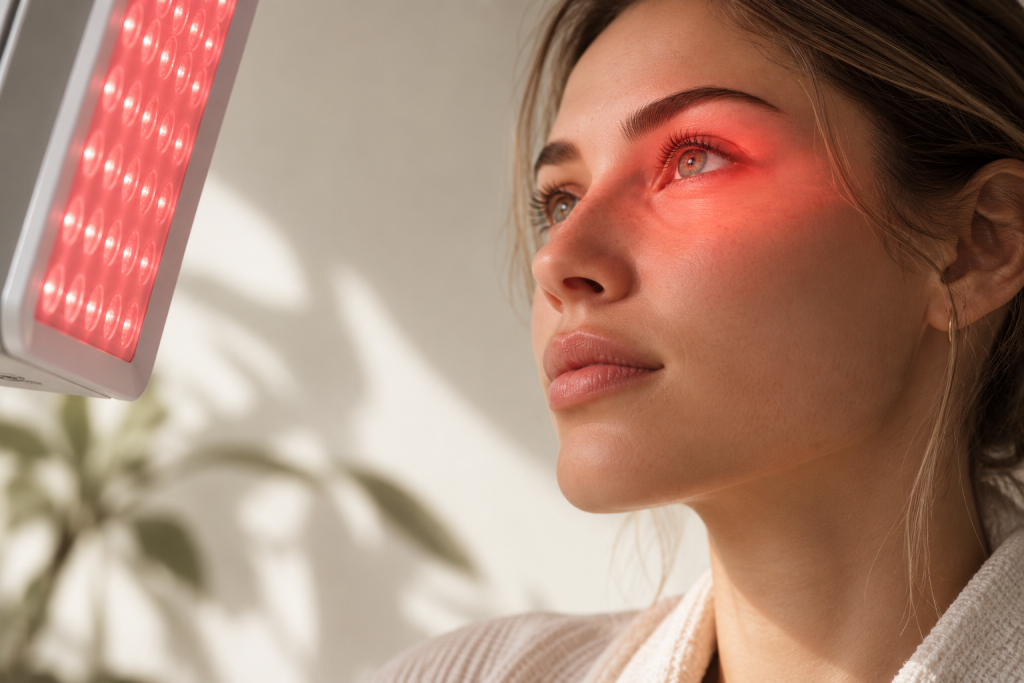
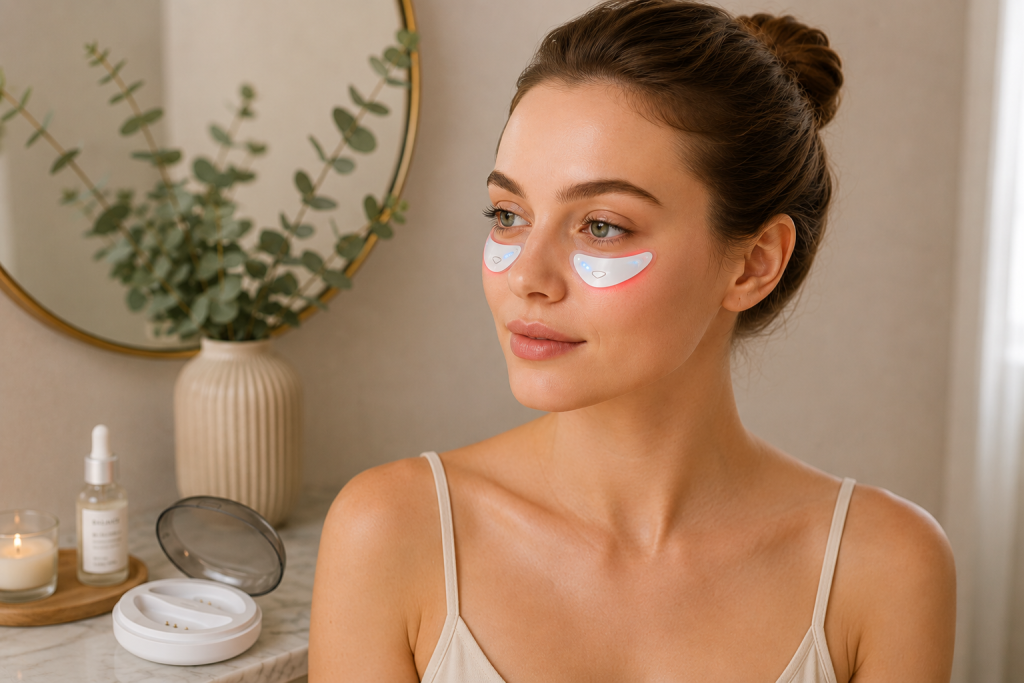
Skin aging is a natural process, but modern science is bringing ever more effective and gentle ways to slow down its effects. One of the most significant trends in recent years is photobiomodulation (PBM) – low-level light therapy using LED diodes, which has proven regenerative and rejuvenating effects.
What is photobiomodulation and why is it so effective?
Photobiomodulation uses non-ionizing and non-thermal light in the range of 600–1300 nm, which penetrates into the deeper layers of the skin. It does not heat or damage the skin and does not cause any downtime.
This light energy activates cellular processes, promotes tissue regeneration, increases collagen production, and soothes inflammation. Today, it is one of the clinically proven methods in aesthetic medicine.
How does light therapy affect the skin?
When light of the right wavelength penetrates the skin, it interacts with the mitochondria – the "power plants" of cells. Thanks to light energy, they begin to produce more ATP, which is fuel for cell regeneration. The result is faster tissue repair, higher fibroblast activity, and overall better skin cell function.
This is what makes photobiomodulation unique: it does not attempt to mechanically disrupt the skin, but activates its own regenerative abilities.
What can individual LED light colors do? Each one affects the skin differently.
LED therapy is not just "one light." Different wavelengths penetrate to different depths and affect different processes.
Red light – collagen stimulation and firmer skin
Red light (approx. 625–750 nm) is the best-known anti-aging light. It increases collagen and elastin production, improves skin firmness, and reduces fine wrinkles. It also soothes inflammation and promotes healing.
NIR light(760–1400 nm) penetrates even deeperthan red light. It activates fibroblasts, promotes extracellular matrix renewal, and can improve skin texture and the appearance of wrinkles. Clinical studies have shown it to be very effective in healing and tissue regeneration.
Blue light – effective against acne
Blue light (415 nm) acts on the surface of the skin, where it destroys acne-causing bacteria and regulates sebum production. Thanks to its anti-inflammatory effects, it reduces redness and active inflammation. It is often combined with red light for maximum effect.
Orange light – brightening and unifying the complexion
Orange light (approx. 610–620 nm) helps to unify skin tone, promotes cell renewal, and gives the skin a natural glow. It is ideal for dull, tired, or stressed skin.
Why is photobiomodulation so popular?
LED therapy is becoming increasingly popular not only in aesthetic clinics, but also in home care. There are several reasons for this:
It is completely painless and non-invasive
No needles, no heating, no damage to the skin.
No recovery time required. The skin can function normally immediately after treatment.It has scientifically proven effects
Dozens of studies confirm increased collagen, faster healing, and improved skin texture.Suitable for all skin types
Including sensitive, problematic, or mature skin.Supports long-term improvement
The effects gradually accumulate with regular use.
Home LED masks: professional results in the comfort of your own home
Thanks to modern technology, photobiomodulation can now be used outside of beauty salons. High-quality LED masks combine red, blue, orange, and infrared light, enabling regular care, which is key to long-term results.
Regular use can bring:
visibly firmer and smoother skin
reduction of fine wrinkles
brightening and evening out skin tone
calming of inflammatory symptoms
better hydration and regeneration
Conclusion
Photobiomodulation is a modern, safe, and effective way to rejuvenate and regenerate the skin. It is supported by extensive clinical research and, thanks to LED technology, is now available to virtually everyone. It activates natural renewal processes and helps the skin look healthier, firmer, and more youthful—without pain, risk, or recovery time.
Sources
Chung H, Dai T, Sharma SK, Huang YY, Carroll JD, Hamblin MR. The nuts and bolts of low-
-level laser (light) therapy. Ann Biomed Eng. 2012 Feb;40(2):516-33.
doi: 10.1007/s10439-011 doi: 10.1007/s10439-011
0454-7. Epub 2011 Nov 2. PMID: 22045511; PMCID: PMC3288797. Source:
https://pubmed.ncbi.nlm.nih.gov/22045511/
Leal Junior EC, Lopes-Martins RA, Baroni BM, et al. Comparison between single-diode low-
-level laser therapy (LLLT) and LED multi-diode (cluster) therapy (LEDT) applications before high-
-intensity exercise.
Photomed Laser Surg 2009;27:617–23. 10.1089/pho.2008.2350. Source: xml-ph-0 Photomed Laser Surg 2009;27:617–23. 10.1089/pho.2008.2350. Source:
https://pubmed.ncbi.nlm.nih.gov/19302015/
Wunsch A, Matuschka K. A controlled trial to determine the efficacy of red and near-
infrared light treatment in patient satisfaction, reduction of fine lines, wrinkles, skin roughness,
and intradermal collagen density increase. Photomed Laser Surg 2014;32:93–100.
10.1089/pho.2013.3616. Source: https://pubmed.ncbi.nlm.nih.gov/24286286/
Hawkins D, Abrahamse H. Influence of broad-spectrum and infrared light in combination
with laser irradiation on the proliferation of wounded skin fibroblasts. Photomed Laser Surg
2007;25:159–69.10.1089/pho.2007.2010. https://pubmed.ncbi.nlm.nih.gov/17603855/
You can find the entire article here:
PHOTOBIO-MODULATION SKIN REGENERATION ANTI-AGING_