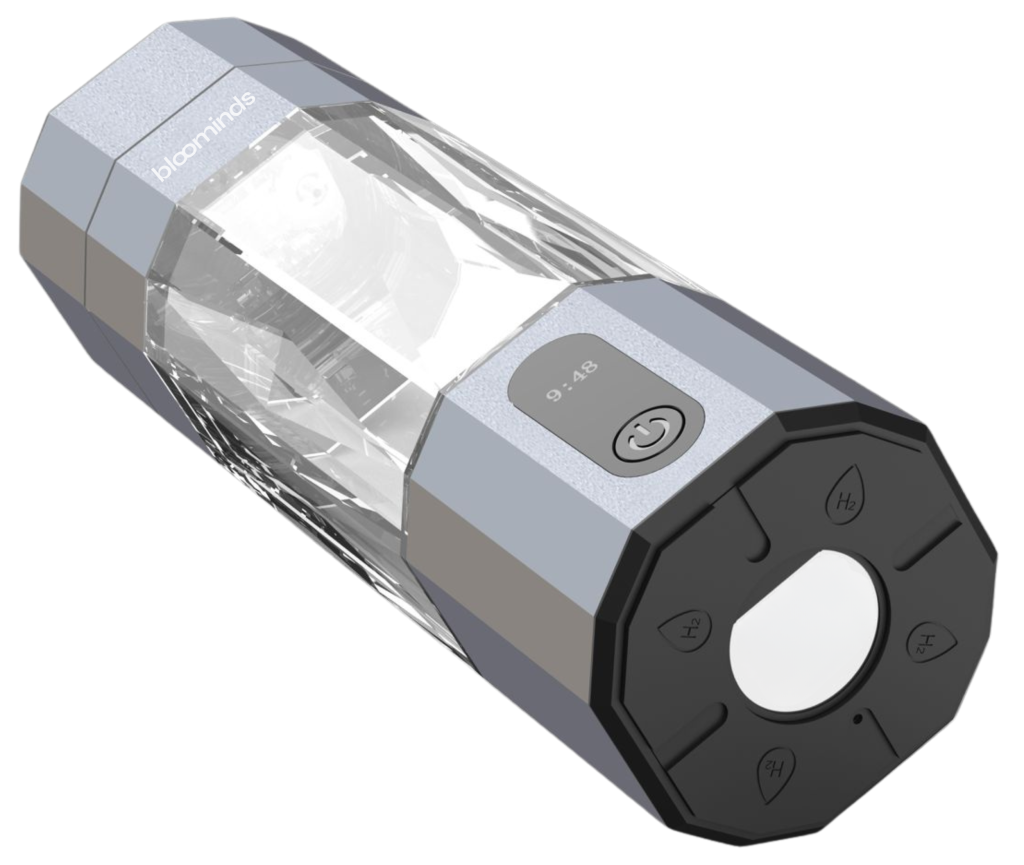
In recent years, there has been increasing talk about molecular hydrogen (H₂) and its potential effects on human health. This inconspicuous element, long considered just an ordinary gas with no significant biological activity, is now being studied by scientists as a promising tool in the prevention and treatment of various diseases.
What is molecular hydrogen?
Molecular hydrogen (H₂) is the smallest and lightest molecule in the universe. Thanks to its size, it can penetrate all cells in the body and even cross the blood-brain barrier into the brain. This makes it a unique antioxidant that works where many other substances cannot reach.
How is hydrogen used?
Research shows several ways to apply molecular hydrogen:
- Drinking hydrogen water – the simplest and safest method of administration.
- Hydrogen gas inhalation – a method also used in clinical studies.
- Baths and local applications – used, for example, for skin problems.
- Infusion – a less common, more experimental method in medicine.
What does science show?
Studies confirm that molecular hydrogen can act as:
- Antioxidant – neutralizes harmful free radicals and reduces oxidative stress.
- Anti-inflammatory agent – supports the suppression of inflammatory processes.
- Cytoprotective factor – protects cells from damage and apoptosis.
- Supports regeneration – can speed up recovery after physical exertion.
Hydrogen has been studied in connection with diseases of the heart, brain, lungs, and liver. The conclusions are preliminary, but the results look promising.
Why is it so unique?
Unlike conventional antioxidants, molecular hydrogen can act specifically in the mitochondria and cell nucleus without disrupting natural processes. This gives it great potential in the prevention and treatment of lifestyle diseases.
Conclusion
Molecular hydrogen is a simple, safe, and natural way to support the body at the cellular level. Studies show its effect on regeneration, immunity, and the prevention of lifestyle diseases. It is not a miracle cure, but a powerful aid on the path to balance and vitality.
Sources:
Dixon BJ, Tang J, Zhang JH. The evolution of molecular hydrogen: a noteworthy potential therapy with clinical significance. Med Gas Res. 2013 May 16;3(1):10. doi: 10.1186/2045-9912-3-10. PMID: 23680032; PMCID: PMC3660246. https://pmc.ncbi.nlm.nih.gov/articles/PMC3660246/
Michaleas SN, Laios K, Tsoucalas G, Androutsos G. Theophrastus Bombastus Von Hohenheim (Paracelsus) (1493-1541): The eminent physician and pioneer of toxicology. Toxicol Rep. 2021 Feb 23;8:411-414. doi: 10.1016/j.toxrep.2021.02.012. PMID: 33717994; PMCID: PMC7920879. https://pmc.ncbi.nlm.nih.gov/articles/PMC7920879/
Liu C., Kurokawa R., Fujino M., Hirano S., Sato B., Li X. K. (2014). Estimation of the hydrogen concentration in rat tissue using an airtight tube following the administration of hydrogen via various routes. Sci. Rep. 4:5485. 10.1038/srep05485 [DOI] [PMC free article] [PubMed] [Google Scholar]