Perex: Obesity is one of the greatest health challenges facing modern society today. It is not just an aesthetic problem, but a complex metabolic condition that can affect immunity, hormonal balance, and the overall functioning of the body. Being overweight is also often associated with increased inflammation and oxidative stress, which can disrupt cell metabolism and their ability to manage energy efficiently. That is why attention is increasingly turning to methods that do not only work on the surface but support metabolism directly at the cellular level.
One such method is photobiomodulation.
Contents
- What is photobiomodulation?
- How does light therapy affect fat cells?
- Systemic effects on metabolism
- A modern approach to supporting metabolism
- How can this technology be used in practice?
- Conclusion
- Scientific sources
What is photobiomodulation?
Photobiomodulation is a non-invasive therapy that uses red and infrared light to support cellular processes. Light of specific wavelengths penetrates tissues, where it interacts with mitochondria – the energy centers of cells. The enzyme cytochrome c oxidase plays a key role here, reacting to the red and infrared spectrum of light and participating in the production of cellular energy (ATP).
Increased ATP production can:
support cellular metabolism
improve tissue regeneration
reduce inflammatory burden
promote the use of fat reserves as an energy source
How does light therapy affect fat cells?
Research suggests that photobiomodulation may trigger several important processes in adipose tissue.
Light stimulates mitochondria to increase their energy activity. This leads to an increase in cAMP levels—a signaling molecule that promotes the breakdown of triglycerides into fatty acids and glycerol. These substances can then be used as a source of energy for the body.
Supports Lipolysis
The process of lipolysis involves the breakdown of fat stores within fat cells. Photobiomodulation can support this process and mobilize fat as an available fuel source for metabolism.
Some fat cells may undergo a natural process of elimination (apoptosis) without causing an undesirable inflammatory response.
Specific wavelengths of light can cause temporary micropores to form in the membrane of fat cells. This releases lipids into the intercellular space, where they can be further metabolized.
Systemic effects on metabolism
Photobiomodulation does not only have a local effect. Studies suggest that it may also have a systemic effect:
improvement in insulin sensitivity
stabilization of blood sugar levels
reduction of chronic inflammation
improvement in lipid profile
These changes can contribute to a more stable metabolic environment and support long-term weight management.
A modern approach to supporting metabolism
Unlike invasive procedures or drastic diets, photobiomodulation is a non-invasive approach that works with the body's natural biological processes.
Instead of "fighting fat," it can support:
cellular energy metabolism
tissue regeneration
the body's ability to use fat reserves more efficiently
How can this technology be used in practice?
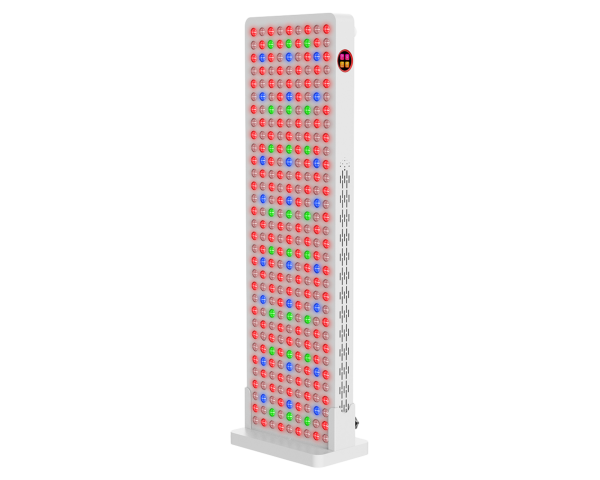
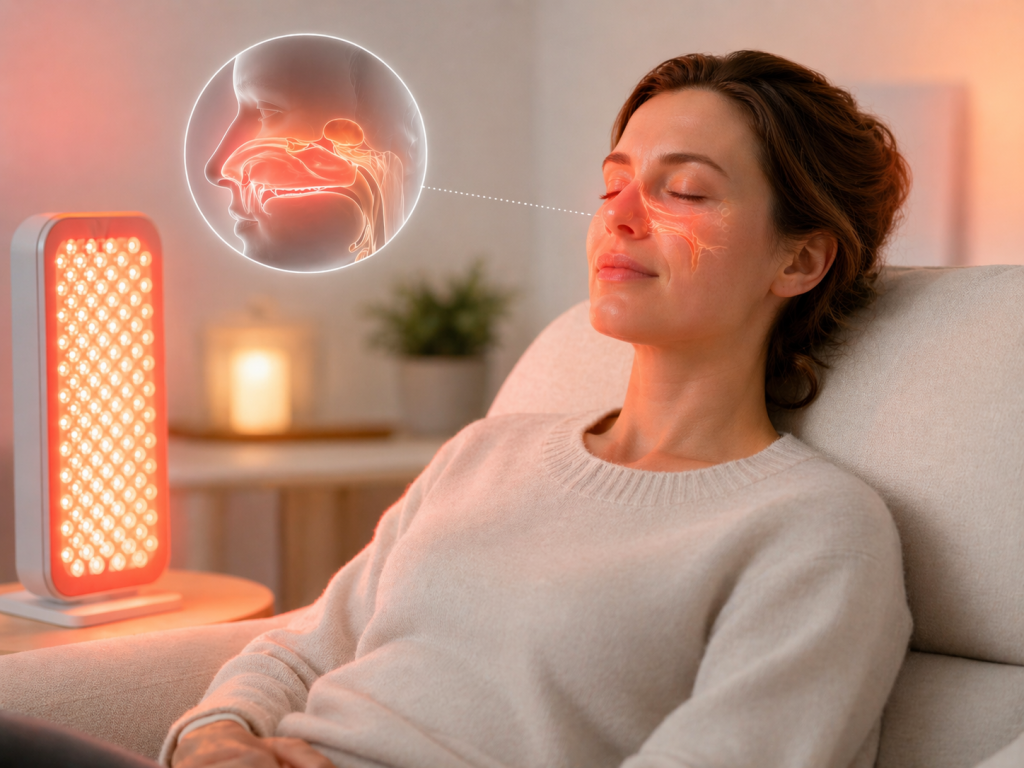
Today, photobiomodulation technology is not only available in research laboratories or specialized clinics. Thanks tomodern red light panels, it is possible to use targeted red and infrared light in the home environment as part of regular care for regeneration, metabolism, and overall balance of the body.
Red light panels provide:
targeted light spectrum
sufficient intensity for deeper tissue penetration
Comfortable to use as part of your daily routine
That is why they are becoming an increasingly popular tool for those who want to support the functioning of the body in a natural way.
Conclusion
Reducing fat tissue is not just a matter of calories and exercise, but also of how efficiently our cells manage energy. Photobiomodulation is a modern, non-invasive approach that supports natural metabolic processes at the cellular level, thereby contributing to better utilization of fat reserves and overall regeneration of the body.
Thanks to red and infrared light technology, it is now possible to incorporate this support into everyday care.
Scientific sources
NCD Risk Factor Collaboration. Worldwide trends in underweight and obesity from 1990 to 2022: a pooled analysis of 3,663 population-representative studies with 222 million children, adolescents, and adults. The Lancet 2024. 16;403(10431):1027-1050.
doi: 10.1016/S0140-
doi: 10.1016/S0140 6736(23)02750-2. Source: 6736(23)02750-2/fulltexthttps://www.thelancet.com/journals/lancet/article/PIIS0140- National Institute of Diabetes and Digestive and Kidney Diseases. NIH. Health Risks of Overweight & Obesity. 2023. Source:https://www.niddk.nih.gov/health-information/weightmanagement/adult-overweight-obesity/health-risks
- Obesity and Cancer. CDC. 2025. Source: https://www.cdc.gov/cancer/riskfactors/obesity.html
- Liu Y, Qi W, Richardson A, Van Remmen, Ikeno Y, et al. (2013) Oxidative damage associated with obesity is prevented by overexpression of CuZn- or Mn- superoxide dismutase. Biochemical and Biophysical Research Communications 438: 78-83. Source: https://www.sciencedirect.com/science/article/abs/pii/S0006291X13011807?via%3Dihub
- Cui R, Gao M, Liu D, Qu S (2014) Overexpression of superoxide dismutase 3 gene blocks high-
-fat diet-induced obesity, fatty liver, and insulin resistance. Gene Ther 21: 840-848. Source: https://www.nature.com/articles/gt201464 Source: https://www.nature.com/articles/gt201464 - Kanter MM, Hamlin RL, Unverferth DV, Davis HW, Merola AJ (1985) Effect of exercise training
on antioxidant enzymes and cardiotoxicity of doxorubicin. J Appl Physiol 59: 1298-1303. Source:
https://journals.physiology.org/doi/abs/10.1152/jappl.1985.59.4.1298 - Jenkins RR, Friedland R, Howald H (1984) The relationship of oxygen uptake to superoxide dismutase and catalase activity in human skeletal muscle. Int J Sports Med 5: 11-14. Source: https://www.thieme-connect.de/products/ejournals/abstract/10.1055/s-2008-1025872