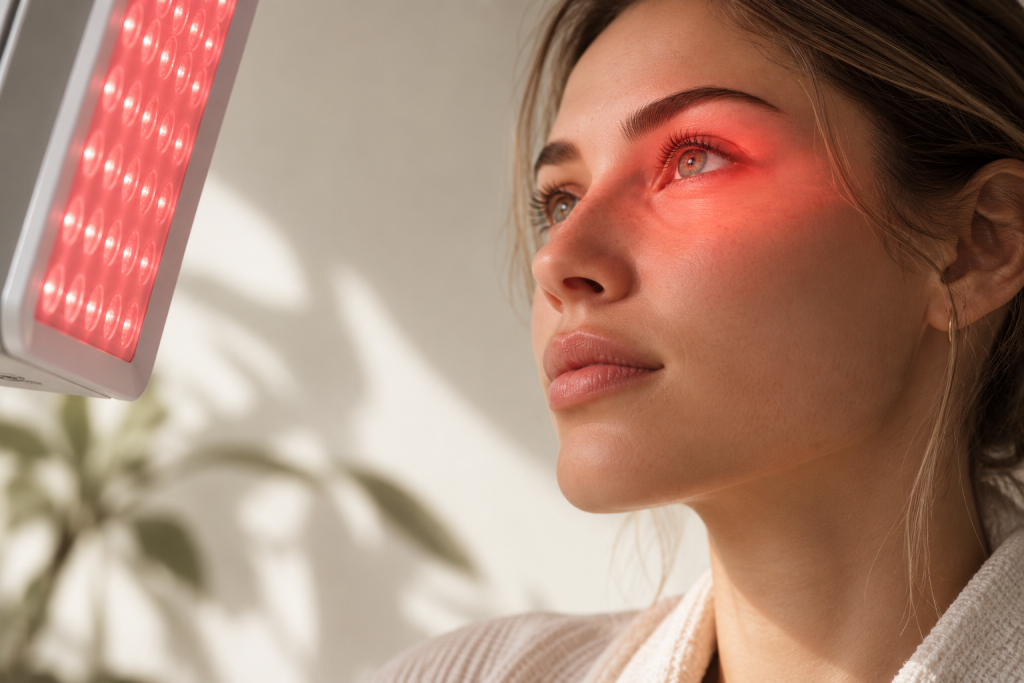
Welcome to the world of modern body care, where cutting-edge technology meets natural regeneration processes. Introducing the Red Light Bed, a revolutionary device that uses the power of red and infrared light to rejuvenate and regenerate your skin, muscles, and tissues. This non-invasive therapy penetrates deep into your body, where it stimulates natural renewal processes and restores your lost vitality.
How does the Red Light bed work?
This innovative therapy is based on the principle of photobiomodulation. This means that light interacts with the cells in your body and stimulates their activity. Different wavelengths of light have specific effects:
Red light: Penetrates the upper layers of the skin and activates fibroblasts, the cells responsible for producing collagen and elastin. Collagen is a key protein that gives the skin its firmness and elasticity, while elastin ensures its elasticity. This makes your skin smoother, firmer, and more youthful.
Infrared light: Penetrates deeper into tissues and improves blood microcirculation. This means that more oxygen and nutrients reach the cells, which accelerates healing and regeneration of muscles and joints. Infrared light also reduces inflammation and relieves pain.
Synergistic effect: The combination of red and infrared light enhances the therapeutic effects and ensures comprehensive regeneration of the skin, muscles, and joints.
Who is the Red Light bed ideal for?
The Red Light bed is ideal for anyone who wants:
- Improve the appearance of your skin and reduce wrinkles
- Relieve muscle and joint pain
- Accelerate the healing of wounds and scars
- Improve recovery after athletic performance
- Promote overall relaxation and well-being
What does this mean for you?
Red Light Bed is a safe, non-invasive, and effective method that will help you achieve your health and beauty goals. The therapy is pleasant and relaxing, and the results are visible after just a few sessions. Treat your body to the luxurious care it deserves and discover the power of light therapy.
Source: https://pubmed.ncbi.nlm.nih.gov/