Perex: Hair loss does not have to be a definitive sentence. While conventional methods often rely on invasive procedures or aggressive chemicals, modern science is revealing the power of photobiomodulation — a non-invasive therapy that uses specific wavelengths of light to literally "restart" hair cells. Discover how FDA-approved low-level laser therapy (LLLT) can activate dormant follicles, block balding hormones, and restore your hair's natural thickness and strength without side effects.
Contents
- Can red light promote hair growth?
- How does the biological "alarm clock" for your hair work?
- Scientifically proven mechanisms of action
- Glow cap: Cutting-edge technology in home care
- Conclusion: What does the scientific consensus say?
- Scientific sources
Can red light promote hair growth?
Hair loss, known medically as alopecia, is not just an aesthetic problem, but a complex process involving our genetics, hormonal balance, and lifestyle. The most common type is androgenetic alopecia, a hereditary thinning of the hair that gradually changes its density in both men and women. However, modern science has come up with a solution that does not rely on chemicals, but on the pure energy of light: photobiomodulation.
How does the biological "alarm clock" for your hair work?
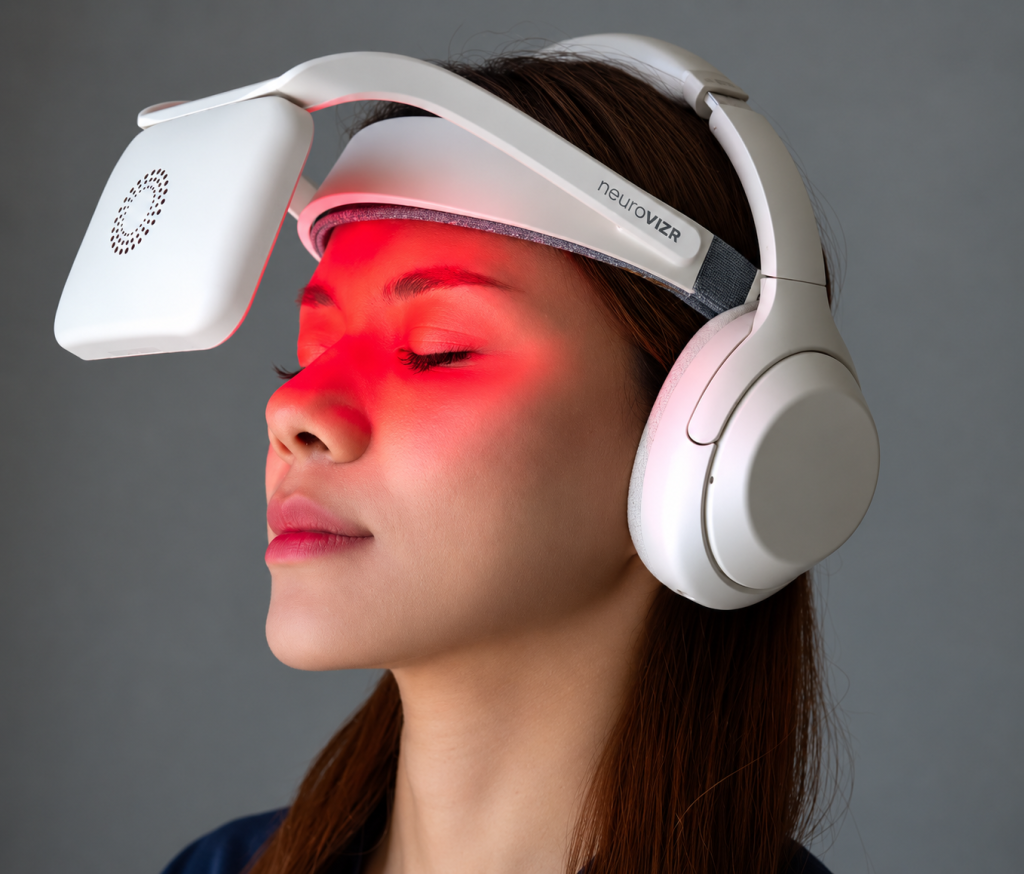
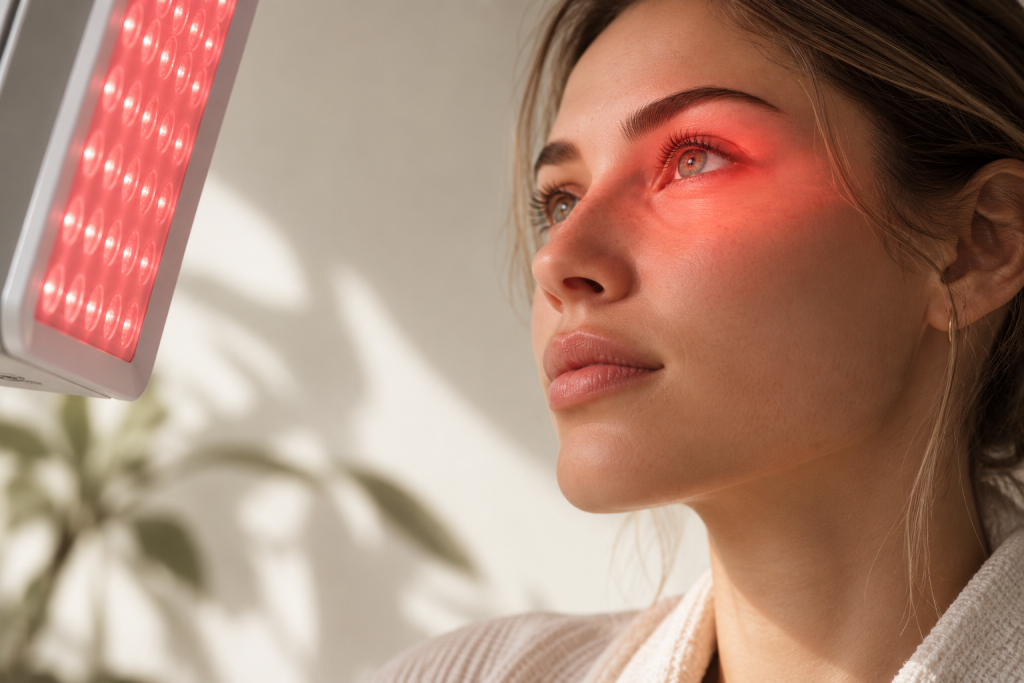
This method is based on low-level laser therapy (LLLT), which stimulates cellular activity in tissues. It uses a so-called "optical window" for biological tissue in the range of approximately 650-1200 nm, where tissue penetration is maximum.
- Recharging cellular batteries: Red light penetrates deep into tissue to reach the mitochondria, the energy centers of cells.
- Enzyme stimulation: Here, it specifically stimulates cytochrome c oxidase, which increases the production of ATP (cellular fuel) and activates cellular repair.
- Activation of the growth phase: Light therapy can reactivate follicles in the resting phase (telogen) and return them to the growth phase (anagen).
- Extended growth: This not only awakens "dormant" hair, but also significantly prolongs its active growth period.
Scientifically proven mechanisms of action
Photobiomodulation does not only address the consequences, but directly targets the causes of hair weakening:
Hormonal regulation: The therapy can modulate the level of the enzyme 5-alpha reductase – the key culprit that converts testosterone into the hormone DHT, which is responsible for baldness.
Blood "infusion" without chemicals: The release of nitric oxide (NO) causes natural vasodilation (widening of blood vessels) in the immediate vicinity of hair follicles. This effect mimics the effects of Minoxidil, but using pure light energy without chemical solutions.
Production of growth factors: The therapy activates specific genes for growth factors (VEGF and HGF) in the skin, which stimulate the formation of new blood vessels and ensure an intensive supply of nutrients to the roots.
Anti-inflammatory shield: In conditions such as alopecia areata , light therapy alleviates the attack of the body's own immune system by reducing the presence of inflammatory signals around the hair roots.
Glow Cap: Cutting-edge technology in home care
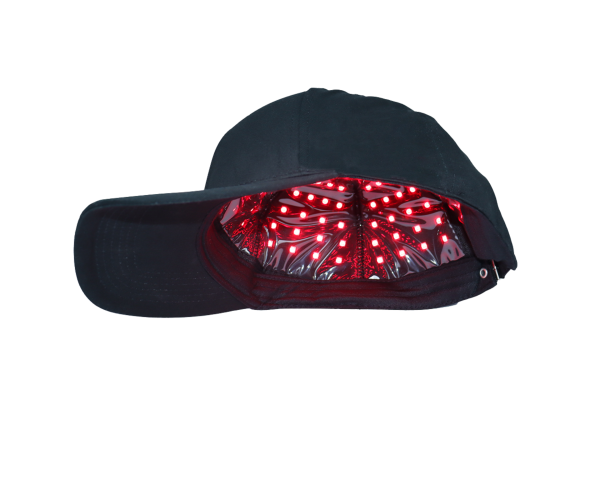
An example of technological excellence in this field is the cap Glow Cap, which is a professional therapeutic tool for home use.
- Combination of wavelengths: Uses 150 powerful diodes combining red light for surface stimulation and near-infrared light for deep penetration to the follicles.
- Pulse frequency: Uses frequencies of 10 Hz and 40 Hz, which prevent cells from adapting to light and maximize regenerative potential.
- Clean energy: The device is FDA certified, completely flicker-free, and has zero electromagnetic field emissions.
Conclusion: What does the scientific consensus say?
The results of scientific studies clearly define low-level laser therapy (LLLT) as a highly effective and safe tool for reversing hair loss across various diagnoses. In androgenic alopecia, there is a demonstrable increase in the density, thickness, and overall strength of the hair fiber. The clinical benefit of this method lies not only in aesthetic improvement, but also in the in-depth structural transformation of the entire hair apparatus.
Scientific sources
1. Danilenko DM, Ring BD, Pierce GF. Growth factors and cytokines in hair follicle development
and cycling: recent insights from animal models and the potentials for clinical therapy. Mol
Med Today. 1996 Nov;2(11):460-7. doi: 10.1016/1357-4310(96)10045-9. PMID: 8947911.
Source: https://pubmed.ncbi.nlm.nih.gov/8947911/
2. St-Jacques B, Dassule HR, Karavanova I, Botchkarev VA, Li J, Danielian PS, McMahon JA, Lewis-
PM, Paus R, McMahon AP. Sonic hedgehog signaling is essential for hair development. Curr
Biol. 1998 Sep 24;8(19):1058-68.
doi: 10.1016/s0960-9822(98)70443-9. doi: 10.1016/s0960-9822(98)70443-9. PMID: 9768360. Source:
https://pubmed.ncbi.nlm.nih.gov/9768360/
3. Gat U, DasGupta R, Degenstein L, Fuchs E. De Novo hair follicle morphogenesis and hair
tumors in mice expressing a truncated beta-catenin in skin. Cell. 1998 Nov 25;95(5):605-14.
doi: 10.1016/s0092-8674(00)81631-1. https://pubmed.ncbi.nlm.nih.gov/9845363/
4. Paus, Ralf & Cotsarelis, George. (1999). The Biology of Hair Follicles. The New England Journal of Medicine. 341.
491-7. 10.1056/NEJM199908123410706. https://www.researchgate.net/publication/12857421_The_Biology_of_Hair_Follicles
5. Stenn KS, Combates NJ, Eilertsen KJ, Gordon JS, Pardinas JR, Parimoo S, Prouty SM. Hair
follicle growth controls. Dermatol Clin. 1996 Oct;14(4):543-58. doi: 10.1016/s0733
8635(05)70383-1. PMID: 9238315. Source: https://pubmed.ncbi.nlm.nih.gov/9238315/
6.