Perex: The gut microbiome plays a key role in our health. It affects immunity, digestion, inflammatory processes, and mental well-being. In addition to diet, sleep, and lifestyle, there is increasing talk today about another factor that can influence the microbiome— light. Modern research suggests that red and infrared light therapy (known as photobiomodulation) can affect not only the cells of the human body, but also indirectly the microbiome. How is this possible?
Contents
- What is the microbiome and why is it so important?
- How the microbiome and the body communicate with each other
- What happens when the microbiome is out of balance
- How light therapy comes into play
- What is photobiomics?
- What to take away from this in practice
- Conclusion
- Scientific sources
What is the microbiome and why is it so important?
The microbiome is a collection of microorganisms that live primarily in our intestines. These bacteria:
help digest food
participate in the creation of important substances
communicate with the immune system
affect inflammation and the body's energy balance
When the microbiome is in balance, the body functions more efficiently. If it is disrupted (known as dysbiosis), this can lead to fatigue, inflammation, weakened immunity, or long-term stress.
How do the microbiome and the body communicate with each other?
The intestines are not an isolated organ. They communicate with the rest of the body in several ways:
through the immune system
via nerve pathways (e.g., vagus nerve)
through substances produced by bacteria
One of the most important groups of these substances are short-chain fatty acids, which help maintain a healthy intestinal mucosa and suppress inflammation. When the microbiome is not functioning properly, these protective mechanisms weaken.
What happens when the microbiome is out of balance?
An imbalance in the microbiome can disrupt the intestinal barrier, increase inflammation in the body, affect the nervous system and psyche, and burden the immune system and metabolism. That is why new ways to support the microbiome are being sought today—not only through diet, but also indirectly through other regulatory systems in the body.
How does light therapy come into play?
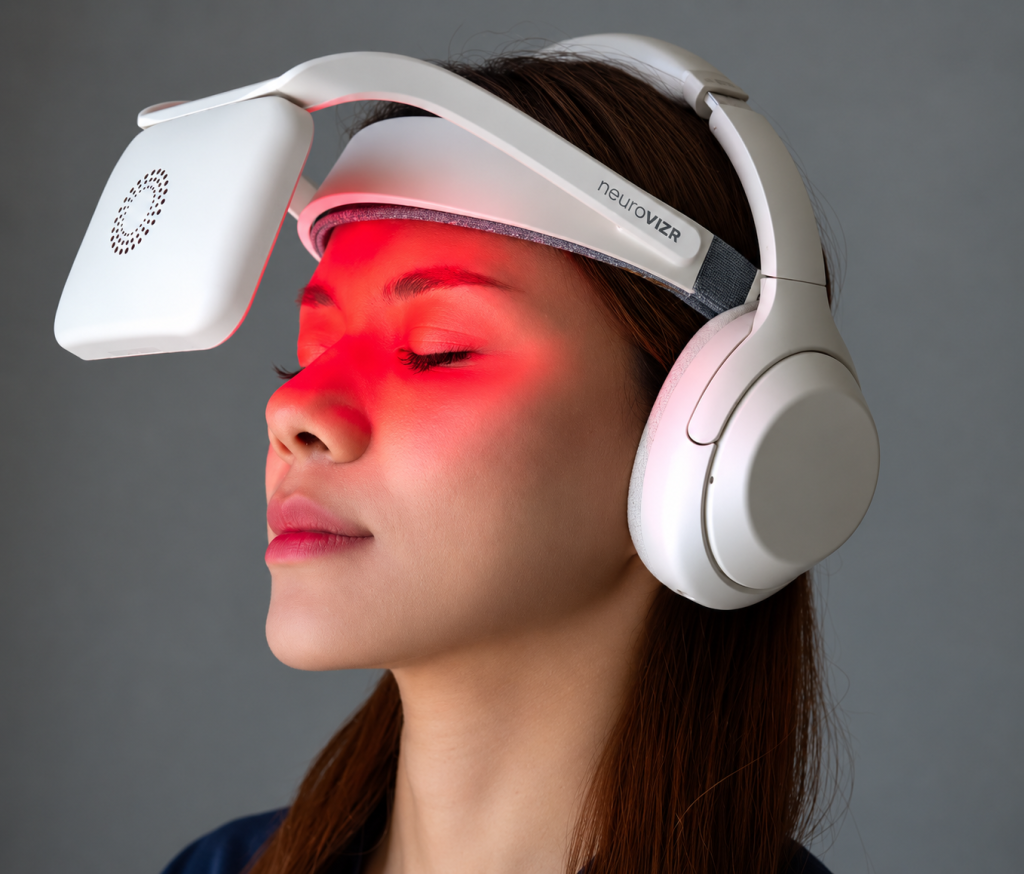
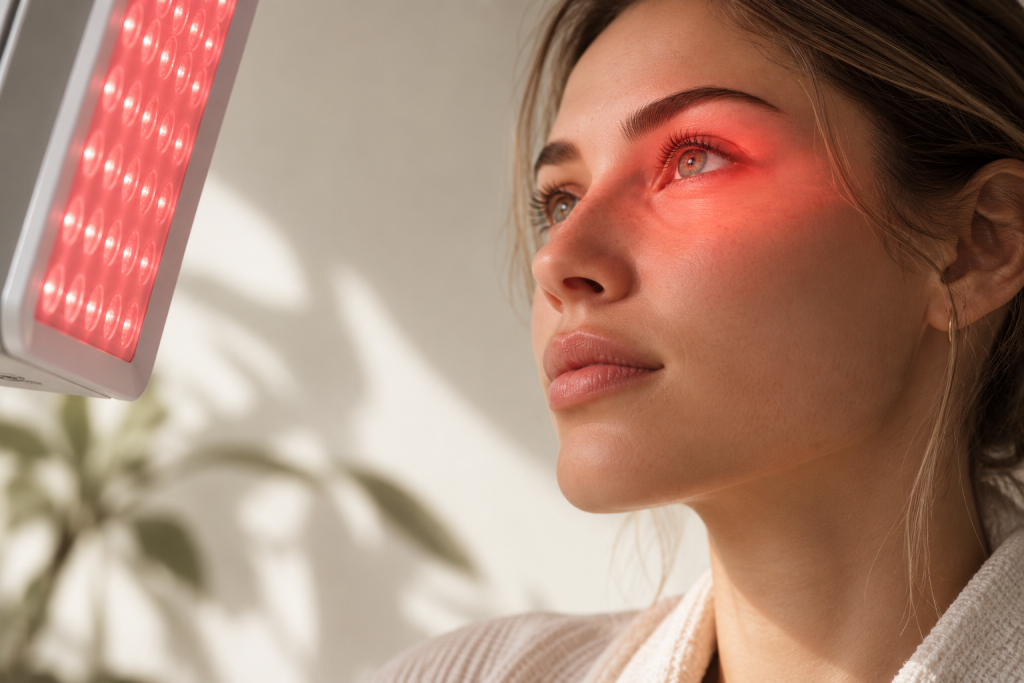
Photobiomodulation uses red and infrared light, which penetrates tissues and affects cellular processes. The main target is not the bacteria themselves, but the cells of the human body —specifically, their energy centers, the mitochondria.
When cells function more efficiently:
manages energy more efficiently
can handle stress
support regeneration
create an environment that is more stable for the microbiome
In other words: light does not act directly on bacteria, but creates better conditions for balance in the body, in which the microbiome thrives.
What is photobiomics?
The scientific term photobiomics describes the relationship between light and the microbiome. Research (mostly experimental so far) shows that light exposure can influence the composition of the microbiome, that changes in the body caused by light can affect the intestinal environment, and that light can indirectly influence inflammatory and metabolic processes. This field is still developing, but it confirms that light is an important biological signal—not only for our brain, but also for the internal balance of the organism.
What to take away from this in practice
A healthy microbiome is not the result of one thing, but a combination of several factors:
quality food,
sufficient exercise,
sleep and coping with stress,
and also supports cell regeneration.
In this context, light therapy appears to be a supplement that can help the body better cope with stress and maintain balance from within.
Conclusion
The gut microbiome is now seen as an active system that helps determine the balance between health and disease—through metabolites, cytokines, and neural pathways. From a "prevention" perspective, it is crucial to maintain eubiosis (microbial balance) and the integrity of the intestinal barrier. In this context, PBM appears to be a potentially interesting tool that can influence not only our cells, but also the microbial ecosystem and related systemic communication in the body.
Scientific sources
1. Qin J, Li R, Raes J, et al. A human gut microbial gene catalog established by metagenomic
sequencing. Nature 2010;464:59–65. Source: https://pubmed.ncbi.nlm.nih.gov/20203603/
microbiota.
2. Jandhyala S, Talukdar R, Subramanyam C, Vuyyuru H, Sasikala M, Reddy D. Role of the normal gut World J Gastroenterol
https://www.wjgnet.com/1007-9327/full/v21/i29/8787.htm
3. Sekirov I, Russell SL, Antunes LCM, Finlay BB. Gut microbiota in health and disease. Physiol
Rev 2010;90:859–904. Source: https://pubmed.ncbi.nlm.nih.gov/20664075/
4. Jonsson M, Jonsson M, Jonsson M, Jonsson M, Jonsson M, Jonsson M, Jonsson M, Jonsson M, Jonsson M, Jonsson M, Jonsson M, Jonsson M, Jonsson M, Jonsson M, Jonsson M, Jonsson M, Jonsson M, Jonsson M, Jonsson M, Jonsson M, Jonsson M, Jonsson M, Jonsson M, Jonsson M, Jonsson M, Jonsson M
4. Leone V, Gibbons SM, Martinez K, et al. Effects of diurnal variation of gut microbes and high-
-fat feeding on host circadian clock function and metabolism. Cell Host Microbe 2015;17:681
689.
Source: https://pubmed.ncbi.nlm.nih.gov/25891358/
5. Kau AL, Ahern PP, Griffin NW, Goodman AL, Gordon JI. Human nutrition, the gut microbiome,
and immune system: envisioning the future. Nature 2011;474:327. Source:
https://pubmed.ncbi.nlm.nih.gov/21677749/
6. Tilg H, Kaser A. Gut microbiome, obesity, and metabolic dysfunction. J Clin Invest
2011;121:2126–2132. Source: https://pubmed.ncbi.nlm.nih.gov/21633181/
You can read the entire article here:
WHAT SCIENCE SAYS – FROM RITUALS TO MODERN PRACTICE NEW TRENDS IN YOGA.docx